The Murray-Darling Basin Plan is currently in the first review since it was introduced in 2012.
The Basin Plan was a major step in saving the Basin from devastation due to over extraction. We have learnt a lot with new research, monitoring and evaluation.
This is now time for all stakeholders to have their input into improving the Basin Plan. Two major reports have now been released by the MDB Authority and Scott Ashby, Executive Director, Basin Science and Knowledge provided a presentation of this review.
Target values for Water Quality parameters identify the desired range, median or upper limit for the proposed purpose. Trigger values are also used to identify limits to WQ parameters which if exceeded require further investigation or immediate remediation or safety measure to be put in place to protect the water user.
The main focus to date in the management of the Murray=Darling Basin has been on water flows and little attention has been given to water quality. In addition, secondary indicators such as vegetation health, fish populations and migratory birds have been the main focus of reporting outcomes with little information on water quality values.
By setting appropriate target values for the primary indicators of water quality, it becomes immediately clear when the ecosystem is not in the desired condition to support healthy secondary indicators and action is required. Also, it is clear which parameter is not in compliance, and the actions can be focused on mitigating that parameter before secondary indicators are adversely affected over time.
The target values need to be established with a good scientific knowledge of the ecosystem and how secondary indicators respond to a range of water quality parameters. Target values need to be Specific, Measurable, Achievable, Relevant and Time-bound, i.e. SMART.
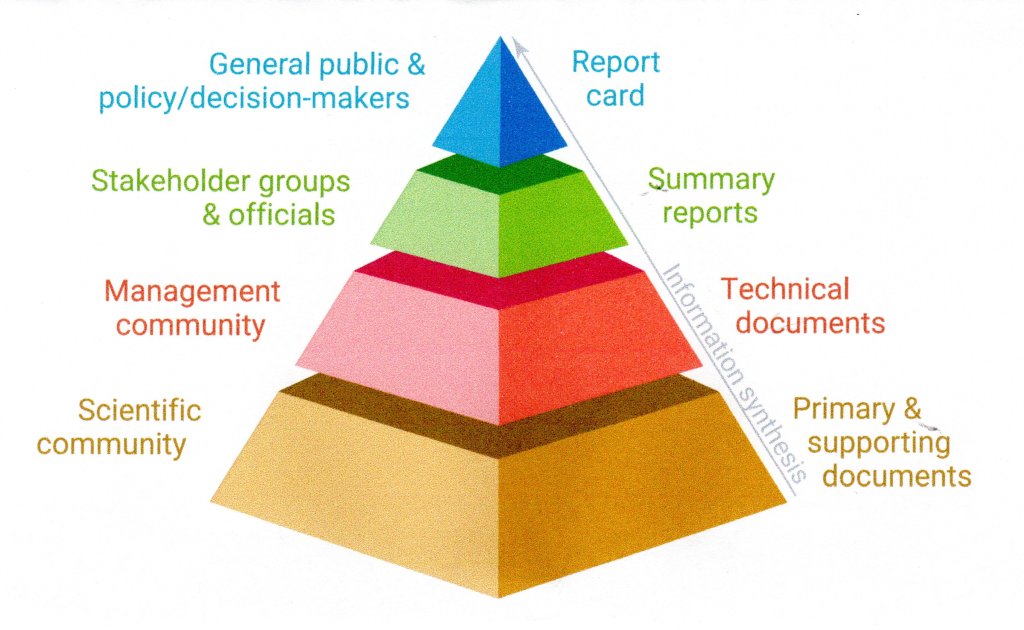
To ensure cultural and community engagement we need an accessible comprehensive centralised dashboard with regular (e.g. annual) meaningful report cards including water quality, cultural and ecological performance against meaningful and appropriate targets.
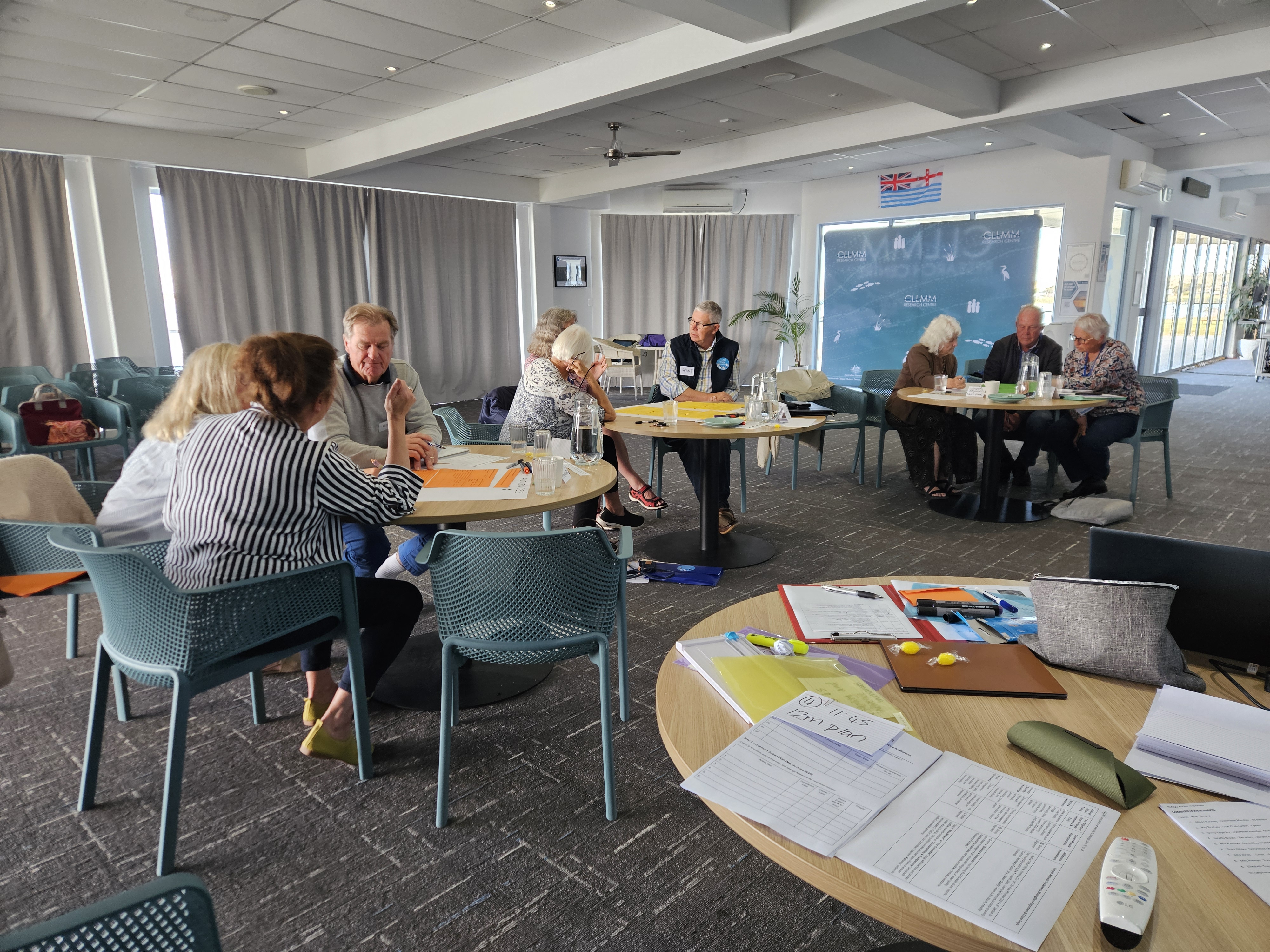
A strategic planning workshop was held on 17 October 2025 facilitated by Emily Hilder of Human Brands held at the CLLMM Research Centre, Goolwa.
The committee members and key volunteers participated in a half day working session to build on our Strategic Framework (2025-2030) and identify clear, practical steps for the year ahead.
The session focused on three connected outcomes:
Gaining alignment on core messages and audiences;
Prioritising visibility and influence strategies to strengthen relationships with government, community and partners; and
Develop an actionable 12 month plan with measurable quarterly milestones and ownership.
Participants worked in collaboratively in small groups ensuring the work remained grounded in the organisations shared purpose of: protecting the River, Lakes and Coorong through science-led advocacy, collaboration and community voice.
With literally thousands of chemicals in everyday use, many of which find their way into water and have different effects on humans and various other biota, water quality poses risks to human and ecological health, among other impacts. One Basin CRC has been developing a discussion paper setting out key issues in water quality within MDB.
What is known about water quality in the MDB?
What are the key gaps in knowledge?
Are we addressing water quality issues effectively?
Where should the research focus be in the next 5-10 years to address some of the emerging threats?
This is an issue that only seems to be recognised after an extreme event occurs. However, water quality can have not only extreme or acute effects but also chronic effects that build up over time. These are not only ecological effects but also human health effects: “a healthy river = a healthy community”.
RLCAG have also produced a Discussion Paper identifying the need for better long term water quality monitoring in the Coorong, Lower Lakes and Murray Mouth (CLLMM) region that is readily available to all researchers and general public so we can better understand and take action to avoid adverse water quality issues before they become extreme events.
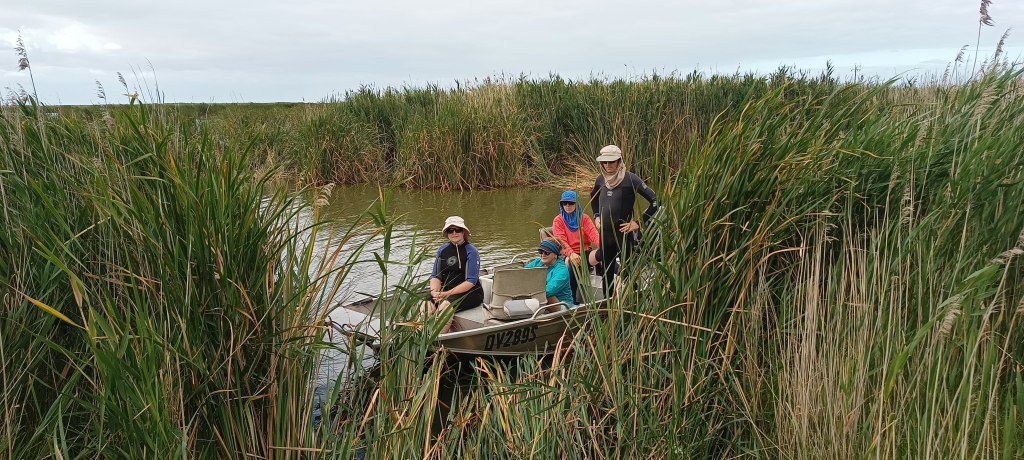
A photo of researchers and citizen science volunteers collecting baseline data for the Lokeri (Freshwater Mussel) Project at Tolderol, Lake Alexandrina has been selected for a Photo Exhibition at the 15th Meeting of the Conference of the Contracting Parties (COP15) in Victoria Falls, Zimbabwe from 23 to 31 July.
The Lokeri Project, part of the CLLMM Research Centre’s Science Program, will contribute to the understanding of the floodplain mussel and hopefully the restoration of ecological balance and biodiversity in the Great Southern Lakes of Lakes Alexandrina and Albert, which is also of particular significance to the Ngarrindjeri community who call the freshwater mussel, ” Lokeri”.
All most welcome to the RLCAG AGM, Sunday 3rd August 2025, 1.45pm for 2.00pm start at CLAYTON BAY COMMUNITY HALL.
Hear from Rebekha Sharkie MP (Federal Member for Mayo), Garry Hera-Singh (Local Fisher/Environmentalist) and Lisa Stribley (DEW) on “WHAT NEXT FOR SOUTH AUSTRALIA”
Algae from a bloom that has killed marine life throughout South Australian seas over the past few months has been detected in the fragile saline environment of the Coorong.
The Karenia mikimotoi-dominated algae mix is believed to have entered the North Lagoon via the mouth of the River Murray during last week’s stormy weather and high tides.
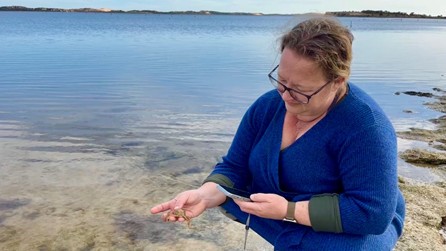
Faith Coleman examines one of the dozens of dead crabs found along the shoreline of the North Lagoon.
RLCAG – proud to be part of the 2025 Wooden Boat Festival, Goolwa. Our Action Group was there to maintain awareness on the critical importance for a consistent quantity of quality water needed to flow all the way through to the Murray Mouth.
Engaging Community Power to Monitor Lokeri/Freshwater Mussel (Velesunio Ambiguus) in the Great Southern Lakes (GSL)
RLCAG have initiated this project and are participating in the citizen science component of the project that will connect scientists, community and First Nations people in gaining a better understanding of an important but historically neglected freshwater species of the region.
The project is being funded through the Coorong, Lower Lakes and Murray Mouth (CLLMM) Research Centre and is led by Dr. Scott Wedderburn, The University of Adelaide.
Freshwater mussels are excellent indicators of the environmental health of river systems where they improve water quality and sediment health and are a food source for other animals. Lokeri (Velesunio Ambiguus) is one of 18 species of freshwater mussels in Australia, and it occurs over most of Eastern Australia including in the Great Southern Lakes (GSL) of the Murray-Darling Basin.
Based on anecdotal information, the Lokeri population of the GSL has not recovered since the Millennium Drought.
This project will garner the interest of landholders, community groups and the Ngarrindjeri community to redress the deficiency in knowledge regarding Lokeri in the GSL.
The specific objectives of the project are:
Undertake citizen science baseline monitoring, and
Link age and growth in Lokeri with environmental conditions.
We want to extend our heartfelt thanks to the Clayton Bay and district communities for their incredible support during our River Science Forum. It was amazing to see so many of you join us to learn about the river system, the changes to the Murray Mouth, and the fish species in need of our support.
A special shout-out to the following for making the evening such a success:
* All our fantastic speakers Prof. Nick Harvey & Dr. Nick Whiterod
* The dedicated volunteers helping with food and sound
* Alexandrina Council for providing grant funding
* And CBCA for the generous hall hire
Thank you again for your passion and commitment to our river!